CIVINET Greece-Cyprus Launches National Campaign for Accessibility and Road Safety
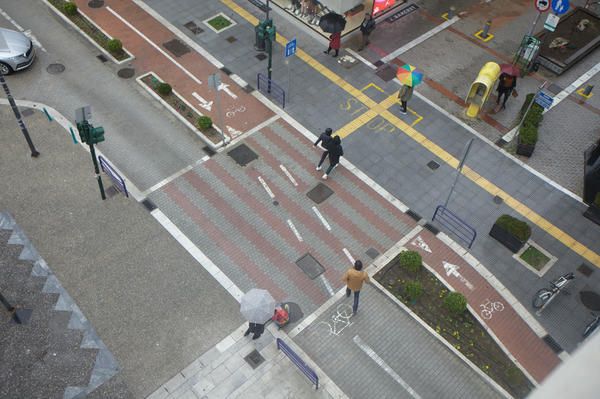
Image from FORMedia.gr by Kostas Mantziaris
Greece is currently experiencing several important developments in the field of sustainable mobility, as assessed by CIVINET Greece-Cyprus.
In September 2025, Greece became the second country in the world, after Spain, to introduce a default 30 km/h speed limit in all residential areas (with a few exceptions) through its new Traffic Code.
This landmark represents a major advancement for road safety, reflecting years of work by several stakeholders, including, the National Technical University of Athens (NTUA), the Association of Greek Transport Engineers, CIVINET Greece-Cyprus, and other organizations involved iin the government’s road safety committee.
Reduction in Traffic Fatalities
Early results from the first six months of enforcement suggest a positive impact. Traffic fatalities fell from 665 in 2024 to 525 in 2025, representing a 21% decrease. Despite this progress, Greece still has a long way to go to no longer rank amongst the lowest-performing countries in Europe on this indicator. Efforts must continue, particularly in urban areas.
At the same time, transport-related air pollution remains a serious challenge. According to CIVINET Greece-Cyprus estimates, approximately 2,500 deaths each year are linked to air pollution from transport. Urban accessibility also remains a pressing concern. A study by the National Technical University of Athens found that around 70% of Athens’ sidewalks do not meet national accessibility standards, while surveys conducted by CIVINET Greece-Cyprus indicate that 25% of citizens experience reduced mobility.
The Next Phase of SUMP Implementation
The national programme supporting the development of Sustainable Urban Mobility Plans (SUMPs) has recently concluded. Originally proposed in 2016 to the Ministry of Environment and Energy by the founder of CIVINET Greece-Cyprus, the programme enabled more than 70 Greek cities to adopt SUMPs.
While this represents a siginifcant milestone, questions reamin regarding the next phases of implementation. In many cities, traffic congestion and parking pressures have intensified in recent years, leaving local authorities searching for effective solutions.
The CIVINET Greece-Cyprus team, drawing on its extensive experience in urban and transportation planning, has concluded that no traffic management measure, major infrastructure project, or “smart” sustainable mobility measure can achieve meaningful results if cities do not first guarantee road safety and accessibility for the majority of its population.
Launch of the 'ART 2438' Campaign
In response, CIVIENT Greece-Cyprus will shortly launch its new national campaign titled “ART 2438”, which highlights two articles of the new Traffic Code alongside two urban transformation tools that have been successfully tested through the SUMPs and General Urban Plans in which it contributed:
- Article 24 for speed limits
- Article 38 for parking prohibition at pedestrian crossing points
- Soft Mobility Networks
- Urban Vehicle Access Regulation (UVAR) Zones
In addition to these powerful tools, the campaign is rolling out an extensive program of diverse initiatives, including:
- Raising awareness and educating young people and adults
- Strengthening citizen participation in decision-making processes
- Capacity building for professionals involved in transport planning or operations
- Improvements to the institutional framework and funding allocation mechanisms
- Rapid deployment of light and pop-up infrastructure on a large scale
- Critical actions by local authorities that contribute to the improved operation of public transportation
- Networking and promotional events for Greek cities
Looking ahead, the network is also preparing for the CIVITAS Forum 2026 in Thessaloniki, where it plans to organise a dedicated one-day conference on 14 September focused on Greek cities, bringing together leading policymakers and mobility experts.