Image from Unsplash by Dean Milenkovic
Alicante (Spain)
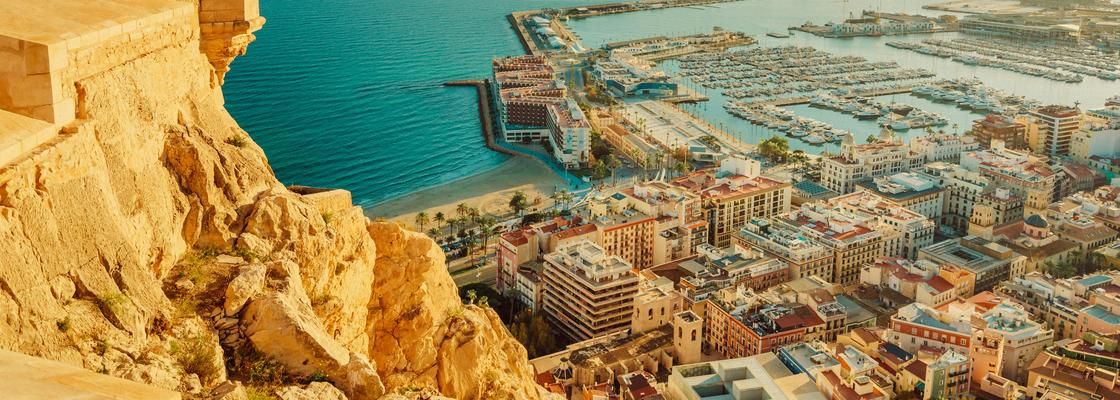
Alicante, located on Spain's Mediterranean coast, is a city of approximately 358,000 inhabitants covering 201.3 km². Bordered by the sea to the east and surrounded by hills such as Mount Benacantil and the Serra Grossa, its coastal geography and growing metropolitan area influence mobility planning by concentrating travel corridors and generating seasonal traffic linked to tourism. As a regional economic and transport hub, Alicante also experiences significant commuter flows through its port, airport and rail connections.
The city is implementing a Sustainable Urban Mobility Plan (SUMP) that prioritises walking, cycling, public transport and low-emission mobility while reducing dependence on private cars. Recent initiatives include expanding cycling infrastructure, improving pedestrian areas, introducing low-emission zones, modernising public transport and promoting electric vehicle charging infrastructure. These measures are supported by Alicante's Climate Action Plan, which aims to reduce greenhouse gas emissions and improve urban resilience. Together, these strategies seek to create a more accessible, efficient and climate-friendly transport system while enhancing the quality of public spaces.
Fast Facts
358,700
Population
201 km²
Area