Komotini Takes a Step Beyond: Advancing Accessibility through the CIVITAS Replication and Deployment Programme
Replication & Deployment Programme
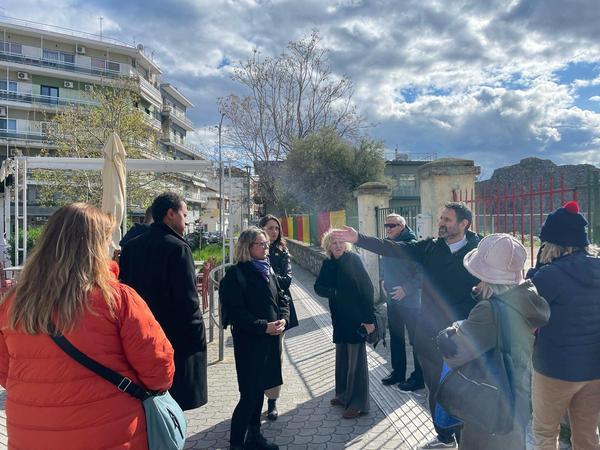
Image by Arianna Americo
From 7 to 9 April 2025, the city of Komotini (Greece) hosted a vibrant three-day study visit as part of the CIVITAS Replication and Deployment Programme. The visit brought together experts, Champion Cities and local stakeholders to co-develop practical solutions to one of Komotini’s most pressing challenges: how to make its historical city centre more accessible and inclusive for all.
A Clear Commitment to Universal Design
Komotini, a compact city in northeastern Greece, has made significant strides in recent years towards improving accessibility. These efforts were recognised in 2021 when the city received a special mention at the European Access City Awards. However, challenges persist, particularly within the protected historical centre, where space is limited and urban planning must navigate heritage preservation constraints, commercial pressures, and diverse community needs.
The study visit was designed to help Komotini move “a step beyond” in its journey towards increased accessibility in its built environment. Participants engaged in a rich agenda of site visits, expert presentations, and hands-on workshops focused on breaking down the challenge, identifying local and external stakeholders to engage and designing implementable solutions. A key highlight was the visit to the PERPATO Centre, an independent living training and rehabilitation facility for persons with disabilities, which underscored the importance of directly involving citizen-led initiatives in the planning and design of urban redevelopment.
“The CIVITAS Replication Programme truly delivered the expected results,” said Dimos Ispikoudis, representing the host city of Komotini. “Knowledge sharing was at the heart of the process.”
Learning from Champion Cities
The visit featured best practice presentations from two Champion Cities—San Cristóbal de La Laguna (Spain) and Saint-Quentin (France)—which shared valuable lessons on their work in Universal Design and accessibility. Their insights offered both inspiration and practical ideas that could be adapted to Komotini’s local context.
“It is important for cities to share experiences—what went well and what didn’t—so we can avoid repeating mistakes and also bring new ideas to others,” highlighted Ángel Miguel Hernández Chinea, Fourth Deputy Mayor, Councilor for Works, Infrastructure, Accessibility, Market, Beaches and Swimming Pools, and the Integrated Water Cycle of La Laguna, underlining the spirit of openness and exchange that defined the visit.
As the winner of the 2024 Access City Award, San Cristóbal de La Laguna was recognised for its comprehensive approach to accessibility and its strong commitment to improving the lives of persons with disabilities. The city has prioritised accessible urban design, inclusive transport, and participation in social activities. Notably, its entire tram network—vehicles and stations alike—is fully accessible and free of charge, while the city centre features acoustic traffic lights and tactile paving for visually impaired people.
In 2021, the city launched the Orange Point, a mobile, inclusive resource hub for events that provides sign language interpreters, anti-noise systems, easy-to-read materials, and trained staff. The city’s structural efforts also include the creation of a Disability Council, which ensures persons with disabilities are directly involved in shaping public policy, and a Disability Ombudsman, who advises and coordinates accessibility initiatives across departments.
Meanwhile, Saint-Quentin—which won third place in the 2024 Access City Award—shared its own major achievement: the transformation of the historical area surrounding the Basilica of Saint-Quentin, including the building itself, into an accessible and welcoming public space. The project, led by renowned architect Jean-Michel Wilmotte, completely reimagined the city centre around this iconic landmark.
This large-scale redevelopment involved the creation of 15,400 m² of redesigned public space, including 5,500 m² of pedestrian areas, 2,200 m² of green space, and a new 150 m² multimodal hub. The area now includes 177 parking spaces, dedicated bike and motorcycle infrastructure and nine electric vehicle charging stations. The city ensured that the upgraded environment not only respects archaeological and heritage constraints but also improves mobility and access for everyone.
“The CIVITAS Study Visit allowed me to expand my knowledge through everyone’s experiences, and I believe developing a shared strategy for Komotini is very important,” added Sandrine Didier, Deputy Mayor for Disability Affairs from Saint-Quentin, reinforcing the collaborative nature of the study visit.
Through these shared experiences, Komotini and participating cities deepened their understanding of how universal design can truly meet the needs of all, ensuring that no one is left behind.
Explore the presentations from the CIVITAS Study Visit in Komotini here.
From Ideas to Action
Through intensive workshops, participants co-developed a set of actionable ideas tailored to Komotini’s needs. These included:
- Partnering with local associations like PERPATO, who can act as ambassadors and support the municipality with their expertise—helping to design more inclusive spaces and raise awareness among citizens about the importance of accessibility.
- Communicating progress step by step to the public, showcasing actions and achievements to build awareness, trust, and support for accessibility measures;
- Working closely with restaurants, hotels, and local businesses to promote awareness of universal design and accessibility, while also introducing the concept of accessible tourism as a driver of inclusion and economic development;
- Strengthening collaboration across municipal departments, ensuring that accessibility becomes a shared responsibility embedded in urban planning, infrastructure, transport, social policy, and culture;
- Developing an overarching accessibility plan with clearly defined short-, medium-, and long-term objectives and measures to guide implementation and track progress over time.
The final day focused on turning ideas into reality. Participants worked with the city to define implementation steps, identify key stakeholders, and explore funding opportunities.
“A very useful opportunity for cities to meet, talk, and exchange experiences—to plan for the future, set new goals, and achieve further progress,” highlighted Katerina Papamichail—Architect and ENAT Board Member, representing AccessibleEU and the European Network for Accessible Tourism (ENAT) at the event together with Ivor Ambrose ENAT Managing Director— reflecting the long-term value of the CIVITAS approach.
The result: a clear pathway toward a more accessible and inclusive Komotini.
Looking Ahead
Komotini’s experience illustrates the value of collaborative learning and local ownership in solving urban mobility challenges. As the city takes the next steps toward developing its deployment plan, its journey will serve as a reference for others committed to making cities more inclusive.
“The visit was a time for quality exchanges based on goodwill and the sharing of good practices and the provision of concrete solutions for the host city.” Concluded Sébastien Froment, CEREMA Project Manager for Accessibility and Building Innovations.
To view the detailed presentations and materials from the CIVITAS Study Visit in Komotini, visit here.
Explore the photo album from the event on Flickr.
Are you a city facing an urban mobility challenge? The second cycle of the CIVITAS Replication and Deployment Programme is now open for applications. Six new Challenge cities will be selected to join this dynamic network of peers and experts. The deadline to apply is 25 April 2025. Check the details on how to apply here.
Author: Arianna Americo