GREEN-LOG Validates the Impact and Scalability of Sustainable Last-Mile Logistics
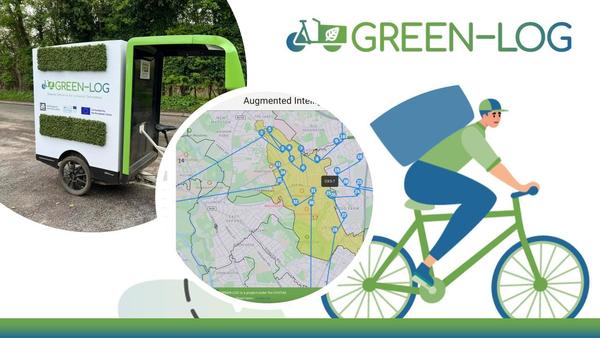
Image by Dariya Rublova
GREEN-LOG has successfully completed its final impact assessment and transferability analysis, confirming that cooperative, digitally orchestrated and zero-emission logistics solutions can significantly improve urban freight systems while reducing environmental impact.
GREEN-LOG has demonstrated innovative last-mile delivery solutions across five Living Labs - Athens, Barcelona, Flanders (Leuven, Ghent, Mechelen), Oxfordshire and Ispra - covering a wide range of urban and peri-urban contexts.
Strong evidence of environmental and operational benefits
The final assessment confirms that GREEN-LOG solutions deliver measurable environmental, operational and societal improvements:
- Reduction in CO₂ and NOx emissions through the use of zero-emission delivery modes
- Significant reductions in congestion and vehicle kilometres, enabled by collaborative routing and consolidation
- Improved delivery efficiency, with reduced delivery times and optimised routes
- High service reliability, maintaining secure and damage-free deliveries
For example, in Athens, collaborative delivery models reduced daily urban travel distance by up to 35% (simulation) and delivery duration by over 30%, while achieving zero-emission operations during pilot activities.
Real-World Innovations Delivering Measurable Results
Each Living Lab demonstrated cutting-edge logistics innovations:
- Athens: Collaborative deliveries between competing logistics providers using a Micro-Consolidation Centre and shared electric vehicles
- Barcelona: Multimodal delivery chains combining rail transport and cargo bikes, extending zero-emission logistics reach
- Ispra: Autonomous delivery droids and cargo bikes achieving 100% delivery success rates in a campus environment
- Flanders: Logistics-as-a-Service (LaaS) platforms reducing delivery tours by up to 55% and lowering costs
- Oxfordshire: Mobile Delivery Hubs and consolidation systems delivering up to 59% time savings and strong economic returns
High public acceptance and societal impact
Beyond environmental and operational benefits, GREEN-LOG solutions were strongly accepted by users, businesses, and stakeholders, demonstrating high levels of satisfaction, strong willingness to continue use, and broad endorsement of sustainable delivery approaches. The project significantly increased awareness of greener logistics options and contributed to improved perceptions of urban quality of life, highlighting the societal value of these solutions. Central to this success was the Living Lab approach, which fostered close collaboration and co-creation with stakeholders and citizens, building trust, ensuring practical usability, and supporting real-world adoption of sustainable urban logistics innovations.
Transferability: Ready for replication across Europe
A key outcome of the project is the confirmation that many GREEN-LOG solutions are ready for replication in other cities. Collaborative logistics models, Logistics-as-a-Service (LaaS) platforms, food surplus redistribution systems, and cargo-bike-based deliveries demonstrated strong transferability potential, with follower cities such as Arad and Helsingborg already identifying pathways for adoption. However, successful replication goes beyond transferring technical solutions alone and requires supportive governance structures, effective stakeholder collaboration, interoperable digital systems for data sharing, adequate urban logistics infrastructure, and enabling regulatory frameworks.
Pathways for implementation and scaling
Findings from the Living Lab demonstrations highlight that:
- Integrated digital and physical solutions are essential for sustainable logistics
- Collaboration between operators - even competitors - is feasible with neutral data-sharing infrastructures
- Local adaptation is critical - solutions must match city-specific needs and constraints
- Policy support and long-term business models are key to scaling
While the project demonstrated strong potential for wider deployment, several challenges remain, including regulatory barriers, land-use constraints and the need for stronger economic incentives.
For more information, explore our public deliverables on the GREEN-LOG Community in Zenodo.
Author: Dariya Rublova
Resources
Multimedia Library
This is recommended related external content and can be viewed by clicking on it. By clicking you consent to the display of external content. This enables personal data to be transmitted to third-party platforms.
Read more about our privacy policy.
This is recommended related external content and can be viewed by clicking on it. By clicking you consent to the display of external content. This enables personal data to be transmitted to third-party platforms.
Read more about our privacy policy.
This is recommended related external content and can be viewed by clicking on it. By clicking you consent to the display of external content. This enables personal data to be transmitted to third-party platforms.
Read more about our privacy policy.