Deep Dives for 2026 Announced!

Image from Unsplash by Johnson Hung
Some urban mobility challenges cannot be solved in a single workshop or webinar. They require time, exchange, and practical experimentation. That is where the CIVITAS Deep Dives come in - offering urban mobility professionals a structured learning journey focused on today’s most pressing mobility challenges.
In 2026, CIVITAS is launching two new Deep Dives:
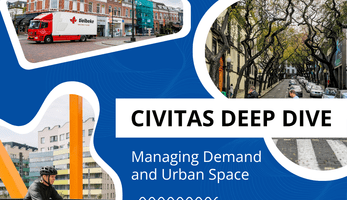
Managing Demand & Urban Space
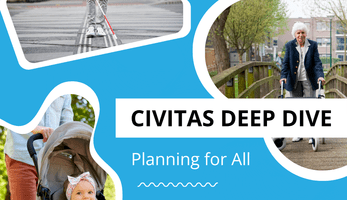
Planning for All
Both programmes combine expert input, peer exchange, and hands-on exercises to help participants develop practical solutions tailored to their own city.
What is the Deep Dive format?
Each Deep Dive consists of five sessions:
3 online sessions
1 in-person session at the CIVITAS Forum 2026 in Thessaloniki, Greece
1 online reflection and evaluation session
Participants work throughout the programme on a real challenge from their own local context, gradually developing an Action Plan supported by assignments, case studies, and expert feedback.
The sessions follow the Absorb – Do – Connect learning model, ensuring participants not only gain knowledge, but also apply it directly to their daily professional practice.
CIVITAS Deep Dive: Managing Demand & Urban Space
Urban space is limited, but demands on streets and curbside space continue to grow. Freight deliveries, parking, public transport, cycling, walking, and public life increasingly compete for the same space.
The Deep Dive on Managing Demand & Urban Space explores how cities can better manage urban logistics and freight while creating more sustainable and people-friendly streets. Participants examine topics such as curbside management, delivery regulations, logistics hubs, cargo bikes, and the integration of freight into wider street redesign and parking reform.
Through CIVITAS examples, European case studies, and practical exercises, participants learn how cities are combining logistics solutions with broader demand and space management strategies. During the in-person session at the CIVITAS Forum, participants work collaboratively on a Living Lab focused on urban logistics and develop integrated solutions for real urban challenges.
CIVITAS Deep Dive: Planning for All
Mobility systems do not work equally for everyone. Many transport networks still fail to fully consider the needs of children, older adults, people with disabilities, women, carers, and low-income groups.
The Deep Dive on Planning for All focuses on how cities can embed inclusion into mobility planning and decision-making. Participants explore why inclusive planning matters, what barriers different groups face, and how cities across Europe are working to create safer, fairer, and more accessible mobility systems.
The programme introduces practical tools and approaches for analysing accessibility, applying equity and participation lenses, and integrating inclusion into governance and planning processes. Throughout the Deep Dive, participants develop an Inclusive Action Plan linked to a concrete challenge from their own city, supported through peer exchange and expert guidance.
Who can join?
The CIVITAS Deep Dives are open to urban mobility professionals, policymakers, consultants, researchers, and students from European universities and universities of applied sciences. All sessions are held in English.
Ready to dive in?
Join the next generation of urban mobility practitioners and gain practical tools, expert insights, and peer support to help shape more sustainable, inclusive, and resilient cities.
Learn more about CIVITAS Deep Dive 5: Managing Demand and Urban Space and Deep Dive 6: Planning for All, including information on how to sign up for the course, on their individual event pages.