Beyond the Congestion: Exploring Sustainable Mobility Solutions in Malta
How can rapidly growing regions address increasing traffic pressures while creating safer, more liveable neighbourhoods? This was the central question explored during a three-day study visit to Malta's Reġjun Tramuntana, held from 20–22 May as part of the CIVITAS Replication and Deployment Programme.
Bringing together local, regional and national stakeholders alongside mobility experts and representatives from CIVITAS Champion and Challenge cities across Europe, the visit provided an opportunity to examine one of the region's most pressing challenges: managing through-traffic, parking pressures and road safety issues in residential neighbourhoods, while supporting a transition towards more sustainable mobility.
A region under pressure
Reġjun Tramuntana, one of Malta's six regional councils, represents nine local councils and is home to nearly a quarter of the country's population. Rapid population growth over the past decade, particularly in areas such as San Pawl il-Baħar (St. Pauls Bay) and Mellieħa, has placed increasing pressure on the transport network.
Compounding this issue, the region occupies a strategic position within Malta's mobility system. As a gateway to Gozo - Malta’s sister island - as well as a key corridor connecting northern and central Malta, it experiences the combined effects of local travel demand, national through-traffic and seasonal tourism movements. At the same time, car dependency remains high, with private vehicles accounting for the vast majority of daily trips.
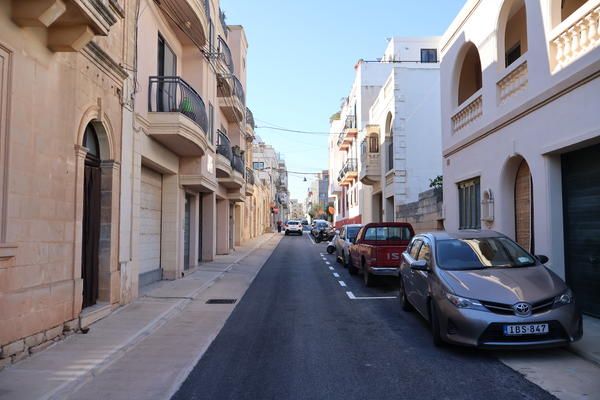
These factors have created a complex mobility challenge. Residential streets are increasingly used as shortcuts, parking overspill affects neighbourhood quality of life and local authorities often lack the detailed data needed to support long-term planning and decision-making.
Through its participation in the CIVITAS Replication and Deployment Programme, Reġjun Tramuntana is seeking to move beyond reactive traffic management and towards a coordinated, evidence-based approach that improves safety, liveability and sustainability across the region.
Understanding the challenge on the ground
The study visit began with an exploration of the local context. Representatives from Reġjun Tramuntana, local councils, Transport Malta, the Ministry for Transport, Infrastructure and Public Works presented the region's mobility vision, ongoing projects and the structural challenges facing local communities.
Participants examined previous attempts to address congestion, parking and road safety issues, discussing the legal framework, governance arrangements, financial constraints and political considerations that influence implementation.
A walking tour through San Pawl il-Baħar provided an opportunity to observe these challenges first-hand. Participants experienced the realities of constrained street layouts, heavy parking demand and the competing pressures placed on public space in one of Malta's fastest-growing localities.
The visit highlighted that mobility challenges rarely exist in isolation. Through-traffic, parking management, street design, public transport limitations, travel behaviour and governance structures all interact, requiring integrated solutions rather than individual interventions.
Learning from European experience
A key objective of the Replication and Deployment Programme is to facilitate peer learning between cities and regions facing similar challenges.
During the second day, participants heard from CIVITAS Champion Cities and mobility experts who shared practical examples and transferable approaches.
A representative from the Ljubljana Urban Region outlined how regional organisations can coordinate mobility planning and support local decision-makers, while balancing political realities, limited resources and long-term sustainability goals.
Reflecting on the similarities between the two regions and the lessons emerging from the visit, Klemen Gostič from the Regional Development Agency of the Ljubljana Urban Region commented:
"As a regional organisation, we face many of the same challenges around coordinating and promoting sustainable mobility. One of the key takeaways from the visit was that lasting progress depends on translating strategic objectives into realistic, phased actions supported by strong governance, stable financing and effective cooperation between stakeholders."
Deniss Ždanovs, Chief Transportation Engineer for Riga followed, presenting their recently developed street typology manual, demonstrating how street design can be aligned with varying levels of traffic and urban activity through a clear and structured framework.
Additionally, Pimyada Wongpan and Cornelia Diehl from fellow Challenge city Stuttgart shared lessons from traffic reduction experiments inspired by Barcelona's superblock model, including the role of citizen-led initiatives and temporary interventions in building support for change.
Additional expertise was provided by Axel Rimbaud from CEREMA, who introduced participants to the principles of the Vision Zero approach to road safety, emphasising the importance of designing transport systems that minimise the risk of fatal and serious injuries.
From ideas to implementation
Building on the lessons shared throughout the visit, participants worked together in a series of collaborative workshops to explore possible responses to Reġjun Tramuntana's challenge. Representatives from the Maltese environmental NGO Flimkien għal Ambjent Aħjar (FAA) joined for these discussions, bringing forward community perspectives and highlighting local priorities related to road safety and public space quality.
Discussions focused on identifying practical interventions, potential funding mechanisms, stakeholder engagement approaches and implementation pathways. Participants examined how improved data collection, parking management measures, traffic reduction schemes and public realm improvements could contribute to a broader regional strategy.
A second field visit to locations across Mellieħa provided further insight into the diversity of mobility challenges facing the region and helped ground discussions in real-world conditions. Travelling by shuttle bus, participants toured several areas affected by congestion, through-traffic and road safety concerns, observing first-hand how local street design, parking demand and traffic flows influence daily mobility patterns. Along the route, Reġjun Tramuntana representatives highlighted a number of particularly challenging locations, including busy junctions, constrained road corridors and residential streets experiencing significant traffic pressure and road safety hazards. The tour allowed participants to connect the strategic discussions taking place in the workshop sessions with the practical realities faced by local communities and decision-makers on the ground.
The final day concentrated on turning ideas into action. Through business canvas exercises and implementation planning sessions, participants identified available resources, potential financing mechanisms and realistic next steps that could support future pilot projects and long-term change.
As the visit drew to a close, Axel Rimbaud from CEREMA reflected on the value of the exchange:
"It was very valuable to exchange perspectives on mobility challenges and solutions with colleagues from across Europe. Discovering a different context facing similar issues was particularly insightful. The team in Reġjun Tramuntana is clearly addressing these challenges with the right approach - combining data collection, community involvement and a step-by-step effort to improve road safety for all users. These discussions are highly motivating and reinforce the importance of continuing to make mobility safer."
Collaboration as the foundation for change
One of the strongest messages emerging from the study visit was the importance of collaboration across all levels of governance. While many promising initiatives are already taking place across Malta, participants recognised that stronger coordination between local, regional and national actors will be essential to delivering lasting improvements. Jeannette Axisa from Transport Malta reflected on this challenge:
"We have a lot of bottom up, on the ground initiatives taking place. We are ready to formalise relations to work together with Regjun to help improve the situation. The challenge I am seeing is that so far in Malta there is no formalised governance structure. Our biggest weakness is that currently everything is built on good will and personal connections and communication lines. We need a stronger governance structure to bring all the key stakeholders together to work on solutions."
For Reġjun Tramuntana, the visit reinforced the value of combining local knowledge with international experience. As Bjorn Bonello, Executive Secretary of Reġjun Tramuntana, concluded:
"Thank you all for bringing a fresh perspective to our challenges. The visit has been inspiring and has given us renewed energy to move forward. We need to start with achievable actions, build credibility through successful projects and demonstrate what is possible. My main takeaway is that collaboration is key. By working together from the ground up, we can deliver a better mobility system for everyone."
The CIVITAS Replication and Deployment Programme offers Reġjun Tramuntana an opportunity to transform these discussions into concrete action. By strengthening its evidence base, testing innovative approaches and fostering cooperation between stakeholders, the region is laying the foundations for safer, more liveable and more sustainable neighbourhoods across northern Malta, while demonstrating approaches that can be replicated in communities throughout the country.
View the photos from the CIVITAS Study Visit in Reġjun Tramuntana.
Author: Adam Oliver