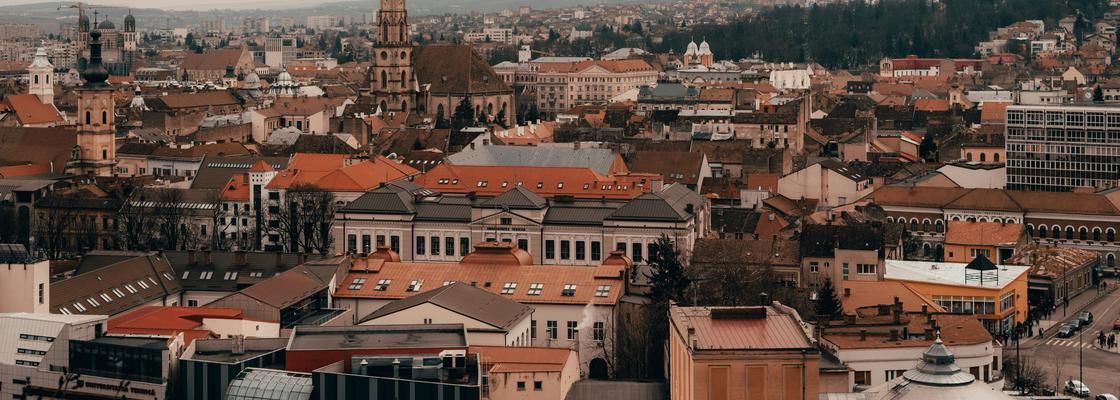
Image from Unsplash by Tamas Pap
Cluj-Napoca (Romania)
Cluj-Napoca, the largest city in north-western Romania, is recognised as one of the country's leading cities for sustainable urban mobility. Situated in the Someșul Mic River valley and surrounded by rolling hills, the city's topography and rapid metropolitan growth create challenges for transport planning, including congestion and increasing commuter flows from neighbouring municipalities. To address these pressures, Cluj-Napoca has adopted an integrated metropolitan approach to mobility.
The city's Sustainable Urban Mobility Plan (SUMP) 2021–2030 prioritises public transport, walking, cycling and shared mobility while reducing dependence on private cars. Recent investments include electric buses, dedicated public transport lanes, expanded cycling infrastructure, pedestrianisation, and the redevelopment of the Someș riverbanks into active mobility corridors. Cluj-Napoca is also progressing major projects such as the metropolitan train and metro, alongside smart mobility initiatives and low-carbon transport measures. Together, these actions support the city's ambition to improve accessibility, reduce greenhouse gas emissions and create a more liveable and resilient metropolitan area.
Fast Facts
286,598
Population
179.5 km²
Area