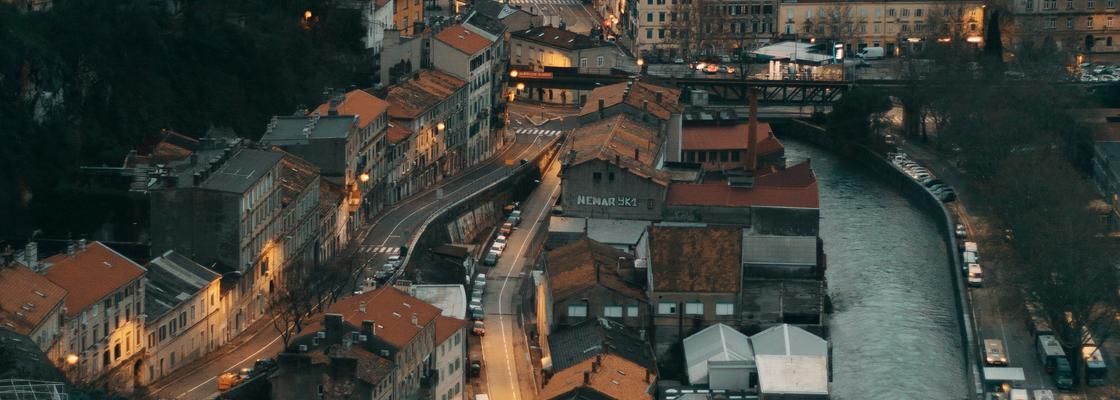
Image from Unsplash by Ozren Cuculic
Rijeka (Croatia)
Rijeka is Croatia’s third-largest city, a historic port on Kvarner Bay of the Adriatic Sea, with about ~105,705 residents within roughly 44 km² of urban area, shaped by waterfront geography that concentrates transport nodes and connections to regional rail and road corridors. Its coastal and hilly terrain creates mobility planning challenges, including integrating multimodal transport across steep inner-city streets and along constrained coastal corridors, while managing freight flows tied to the port. Rijeka’s urban strategy — notably the “Connect Rijeka in 2030” development plan — embeds sustainable transport goals that emphasise intermodal public transport, bicycle and pedestrian infrastructure, smart traffic management and low-emission vehicles, with the aim of making public transit cleaner, more efficient and accessible and integrating new transport modes like e-mobility and bike sharing into the urban system.
The city has also participated in the CIVITAS SUMPs-UP project to build capacity for Sustainable Urban Mobility Plans (SUMPs), advancing long-term approaches to reduce transport impacts.
Fast Facts
105,705
Population
44 km²
Area
May 2009
Membership start