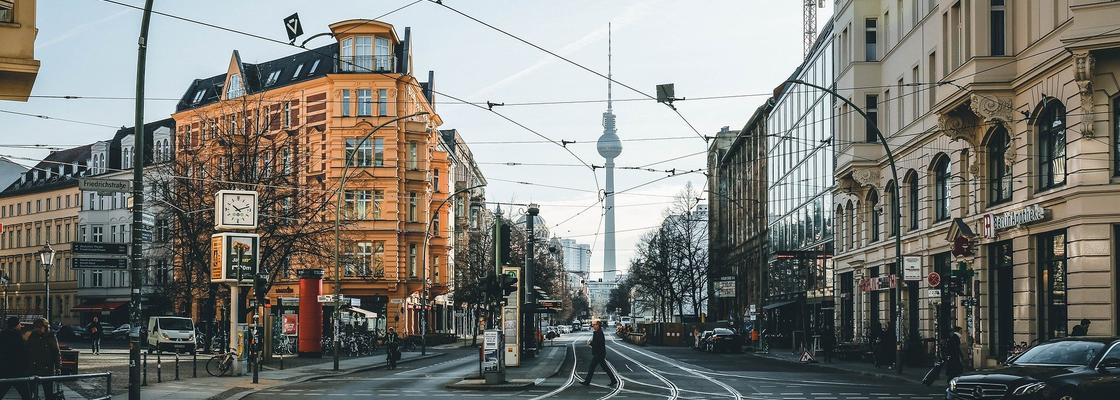
Berlin (Germany)
Berlin, Germany's capital and largest city, spans approximately 891.8 km² and houses around 3.9 million residents as of late 2024 . Situated on the North European Plain, its flat terrain and extensive waterways, including the Spree and Havel rivers, facilitate diverse mobility planning.
The city is committed to sustainable urban mobility. Berlin's Sustainable Urban Mobility Plan (SUMP) aligns with European guidelines to enhance public transport, cycling, and pedestrian infrastructure . The Urban Development Plan Climate 2.0 (StEP Klima 2.0) aims for climate neutrality by 2045, integrating land use with climate adaptation strategies . Additionally, the Berlin Strategy 2030 outlines goals for a climate-friendly city and improved accessibility.
Berlin boasts one of Germany's lowest car ownership rates, with 329 cars per 1,000 inhabitants, attributed to its robust public transport system and cycling infrastructure. These initiatives underscore Berlin's dedication to sustainable and inclusive urban mobility.
Fast Facts
3.9 million
Population
891.8 km²
Area
Projects




Knowledge Bank


News & Events


Partners