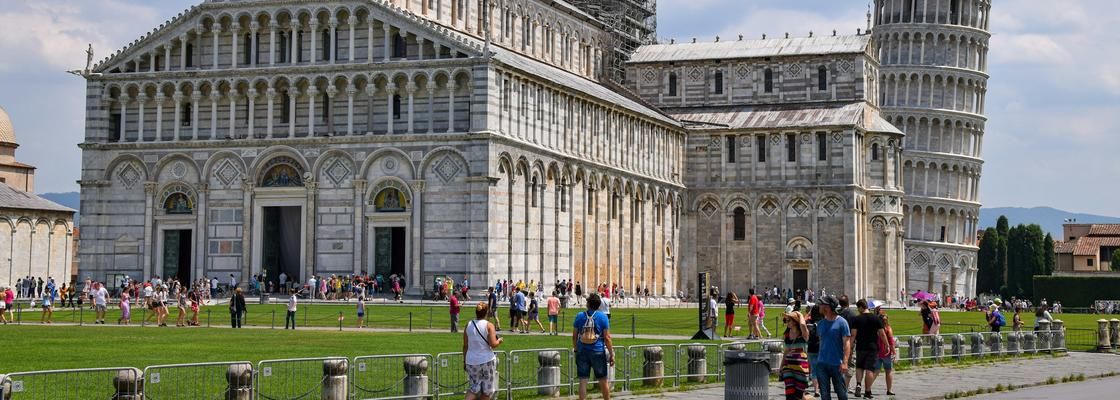
Image from Unsplash by Joshua Kettle
Pisa (Italy)
Mobility in the city of Pisa is shaped by the need to balance everyday travel with a high presence of students and visitors, while safeguarding its historic urban fabric. Transport policies focus on reducing traffic impacts, improving accessibility, and supporting sustainable modes of travel within a compact and culturally sensitive city context.
Public transport is primarily provided through an urban and interurban bus network that connects residential areas, railway stations, and key destinations, including major tourist sites. Cycling plays a significant role in daily mobility, supported by a network of cycle paths and the city’s flat topography, which makes bicycle use accessible to a wide range of users. Shared mobility services further complement this system.
Traffic management measures include limited traffic zones in the historic centre to protect heritage areas and reduce congestion and emissions. Parking regulation and car-sharing services aim to limit private car use. Future mobility plans include the development of tramway lines to strengthen sustainable transport options. See Pisa's SUMP here. Pisa has been a CIVITAS City since November 2007.