Urban Nodes in TEN-T: From Planning to Implementation
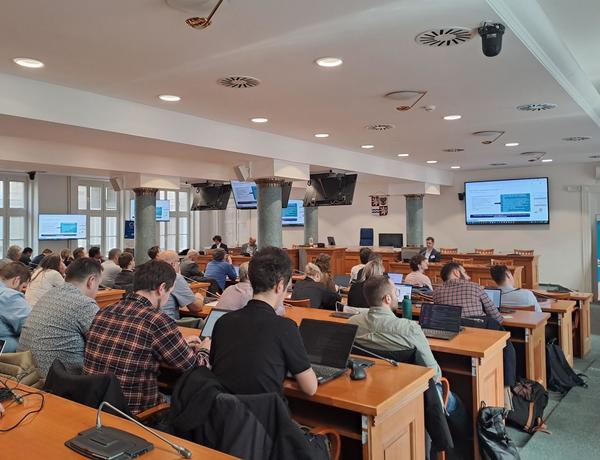
Image by Alena Klímová
This question was at the heart of a seminar jointly organised by CIVINET Czech and Slovak Republic, Transport Research Centre and the Ministry of Transport of the Czech Republic in Prague on 25 February 2026, bringing together nearly 60 representatives of cities, regions, national authorities and mobility experts. Its aim was clear: to move beyond policy obligations and explore how TEN-T urban nodes can become engines of integrated, multimodal mobility.
From European Policy to Urban realities
The opening session unpacked the latest developments in European transport policy and its implications for cities.
Particular attention was paid to the evolving role of Sustainable Urban Mobility Plans (SUMPs) in urban nodes. The Ministry of Transport presented the core principles of a new national methodological framework, stressing a pragmatic approach: requirements must be defendable at the EU level, and also workable for cities.
This pragmatic tone carried over into the panel discussion. City representatives were clear that strategies only make sense if they lead to action. Draft methodologies need to be shared early, guidance must be understandable, and new planning obligations should be meaningfully linked to future funding opportunities. As several speakers noted, plans that “sit on a shelf” help neither cities nor citizens.
Measuring what matters: SUMP 2.0
The second session shifted the focus from planning to performance. Experts from RUPPRECHT CONSULT – Forschung & Beratung GmbH introduced the updated SUMP 2.0 methodology and the SUMP Dashboard, showing how cities can better monitor progress and evaluate the real impact of mobility measures. The key message was clear: success lies in measurable outcomes, not paperwork.
Multimodal hubs in action
Concrete examples from practice closed the seminar. Plzeň showcased how investments in park-and-ride facilities, public transport extensions and well-designed transfer hubs are already reshaping everyday mobility. Prague presented the ambitious Smíchov transport terminal, a flagship project integrating rail, metro, tram, bus and future P+R facilities. Beyond infrastructure, the project places strong emphasis on high-quality public space, pedestrian and cycling access, and coordinated wayfinding – all supported by long-term cooperation between multiple public and private investors.
The seminar confirmed a shared understanding: TEN-T urban nodes are not just a regulatory requirement, but a powerful opportunity to better connect transport, spatial development and quality of life. The challenge ahead is turning good strategies into funded, deliverable projects that make a real difference in cities.
Author: CIVINET Czech and Slovak Republics