Magyar CIVINET Meeting Explores Public Transport Solutions in Nyíregyháza
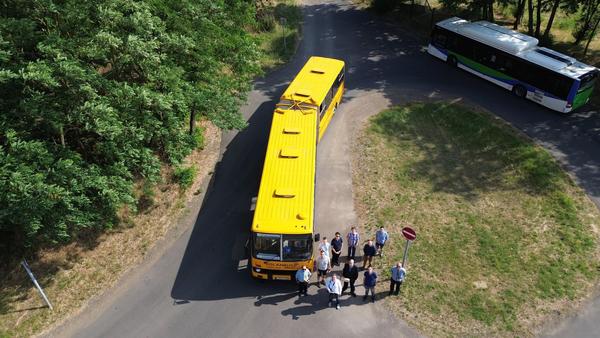
Image by Ekés András / Mobilissimus Ltd.
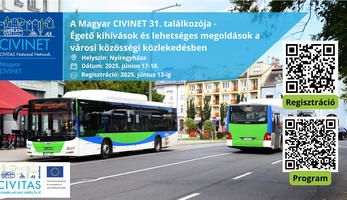
Magyar CIVINET held its 31st meeting in the city of Nyíregyháza under the theme: "Burning challenges and possible solutions in urban public transport".
The two-day event brought together mobility professionals, operators, and planners to exchange ideas and explore responses to shared challenges across Hungarian cities and beyond.
Addressing Common Challenges in Public Transport
Hungarian cities — despite their different contexts — face similar difficulties when it comes to maintaining, upgrading and renewing their public transport systems. Despite this, participants emphasised that innovation, peer learning, and locally tailored solutions can help turn these challenges into opportunities CIVINET members and interested parties.
The programme featured a mix of field visits, expert presentations, and roundtable discussions, giving participants an in-depth look at the local context in Nyíregyháza while also sharing practices from across the region.
Field Visit Highlights Local Mobility Gaps
On the first day, participants visited key mobility hotspots on the outskirts of Nyíregyháza, including areas near a major employer during shift change. The tour included a ride on the city’s iconic refurbished Ikarus 280 bus—offering a nostalgic yet practical lens on current service demands and constraints.
The second day focused on the city’s recent transport overhaul, led by the mobility consultancy Mobilissimus. Presentations covered the rationale behind changes to the timetable and route network, the city’s response to fluctuating passenger demand, and accompanying investments in infrastructure and communication. Speakers explained how transparent public outreach helped secure social acceptance for the reforms.
In addition to Nyíregyháza, DKV, BKK, and Transurban R.T., the public transport operator in Satu Mare, Romania, also reported on local projects and developments that seek effective responses to emerging challenges from customers, transport organizers, and service providers. On behalf of BKK, participants were able to learn about the results of the DREAM_PACE Interreg CE research and development project, which designs and tests demand-driven public transport solutions. Experts from Debrecen gave presentations on topics including the fleet renewal process and its effects, as well as the production and use of automatic passenger counting data.
Cross-border Collaboration
Magyar CIVINET continues to promote collaboration not only within Hungary but also with Hungarian-speaking cities outside the country. A session dedicated to Satu Mare’s public transport showcased its rapid fleet renewal, the introduction of digital ticketing and real-time passenger information systems, and the coordination of urban planning with mobility—such as the opening of the new Szamos Bridge and pedestrianisation of the city centre.
Demand-responsive public transport solutions also received close attention during the roundtable discussion, where theoretical, practical, and IT experts shared their thoughts, their experiences to date and their visions for the future on how to overcome the obstacles to implementing DRT systems and promote more efficient public transport solutions.
The event concluded with a visit to the new Volánbusz depot on Tiszavasvári Road, where Nyíregyháza’s 41 compressed natural gas (CNG) buses—introduced in 2018—are maintained and refuelled. The site visit illustrated how investment in infrastructure complements fleet upgrades and supports cleaner transport operations.
CIVINET Magyar extends its gratitude to the City of Nyíregyháza for its hospitality, to all speakers and panellists for their valuable insights, and to participants for their active engagement throughout the meeting.
Author: Magyar CIVINET Titkárság