Guimarães Hosts the CIVITAS Summer Course 2026
Learning CentreMUSE
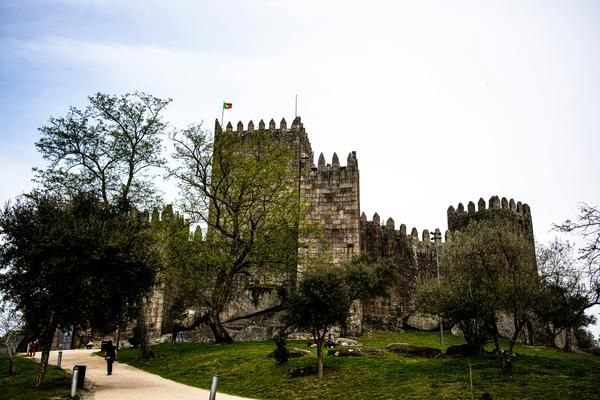
Image from Unsplash by Wendell Adriel L.S.
More than just a training event, the CIVITAS Summer Course 2026 in Guimarães, Portugal, provided an opportunity for urban mobility professionals from across Europe to learn, collaborate and develop practical solutions to real-world mobility challenges.
Hosted by the City of Guimarãesand Laboratório da Paisagem, this year's Summer Course focused on lobbying and advocacy in sustainable urban mobility. Through the CIVITAS action-learning approach, participants worked directly on three mobility challenges identified by the city: improving intermodal connections between the bus terminal and railway station, encouraging sustainable school mobility, and addressing urban freight distribution in the historic city centre.
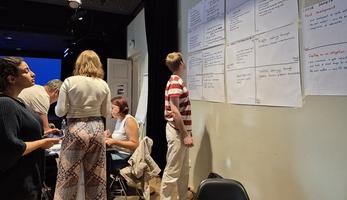
Over four intensive days, participants from local authorities, research institutes, consultancies and mobility organisations exchanged experiences, explored the city, engaged with local stakeholders and worked in international teams to develop practical recommendations for Guimarães. The course concluded with presentations of the proposed solutions to representatives of the municipality.
A key strength of the Summer Course was its highly collaborative nature. Participants repeatedly highlighted the opportunity to work alongside peers from different countries and professional backgrounds, combining expertise and perspectives to tackle complex urban mobility challenges.
As one participant from Ireland reflected:
“I’m returning home with fresh ideas, new friendships, stronger professional connections and plenty of inspiration to bring back into my work.”
The challenge on sustainable urban logistics particularly demonstrated the value of the CIVITAS action-learning methodology. Participants engaged with local businesses, market traders, residents, delivery operators and municipal representatives to better understand the realities of goods movement in a historic UNESCO World Heritage city. By combining local knowledge with international experience, the teams developed evidence-based recommendations that balance accessibility, economic vitality and heritage preservation.
Another participant described the Summer Course as "an incredibly rewarding experience" that offered the opportunity to learn from colleagues across Europe, explore real-world urban mobility challenges and work collaboratively on practical solutions for the host city.
Beyond the challenge work, participants explored broader topics including behavioural change, people-centred street design, school mobility and stakeholder engagement. The overarching theme of lobbying and advocacy encouraged participants to reflect on how cities can build support for mobility measures, engage communities and communicate complex changes effectively.
For many attendees, the greatest value of the Summer Course was the opportunity to exchange experiences with professionals facing similar challenges in different contexts.
As one participant noted:
“The real value of the CIVITAS Initiative lies in its ability to connect people who believe that innovation in urban mobility is driven not only by technology and policy, but also by cooperation, shared experiences and a common vision for the future.”
The Summer Course once again demonstrated the power of peer learning within the CIVITAS network. Participants returned to their cities with new insights, stronger professional networks and practical ideas to help accelerate the transition towards cleaner, safer and more sustainable urban mobility.
CIVITAS would like to thank the City of Guimarães, Laboratório da Paisagem, all speakers, mentors and participants for contributing to a week of learning, collaboration and inspiration. Special thanks also go to the municipal team of Guimarães for openly sharing their mobility challenges and working closely with participants throughout the week, helping to make the Summer Course a truly hands-on learning experience.
Author: Marjolein van de Nadort