Designing Safer Spaces: Best Practices from CIVITAS Cities
Image from Unsplash
What happens when cities reimagine and redesign their streets to prioritise active mobility and ensure safe, inclusive spaces for all?
From reclaiming car-centric roads to creating people-focused neighbourhoods, CIVITAS Cities are leading the way in making urban spaces safer, more accessible and climate-resilient. In the recent webinar on 3 July, titled "Designing Safer Spaces: Best Practices from CIVITAS Cities", CIVITAS learned about:
- Bologna’s tactical transformations in urban school squares and how they have turned the latter into multifunctional spaces that serve the whole community;
- Warsaw’s piloted improvements around two primary schools, and they ways they have made the areas more accessible and attractive for all road users;
- London's launch of a school street pilot, which aims to shift the focus from cars to active travel;
- Trikala’s introduction of smart crossings and sensor-based data collection to improve school street safety and move towards climate-resilient and people-centred mobility;
- Reykjavik’s prototype to make long-term construction sites safer and more appealing in residential neighbourhoods; and
- Cugir’s rolled out plans to reclaim streets for people by improving road safety through active mobility interventions and behaviour change campaigns.
These initiatives reflect a shared commitment: turning inspiration into solutions across cities.
Representing four CIVITAS projects, namely AMIGOS, ELABORATOR, JUST STREETS and REALLOCATE, the event facilitated a rounded discussion on what safety really means in practice and how to overcome shared challenges.
With 106 active participants during the webinar, the conversation highlighted actionable lessons from the field. In this article, we explore some of the key takeaways from the session.
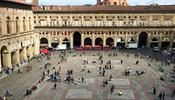
City of Bologna: Prototyping public space – School squares from planning to tactics and back again
In Bologna, school squares were first implemented as tactical urbanism interventions: temporary, low-cost, and experimental solutions aimed at improving the livability of spaces in front of schools. Through a continuous process of observation, monitoring, and co-design, these transformations have evolved into permanent urban devices capable of integrating road safety, sustainable mobility, education, and environmental quality. Bologna's interventions, through community co-design and robust monitoring using tools like counting, mapping, surveys, and interviews, showed high engagement, with over 87% increase in time spent in pilot areas during school drop-offs and 270% increase in time spent in pilot areas during weekends.
Today, school squares are important components of broader and strategic municipal projects such as Città 30 and Bologna Verde. Meanwhile, experimentation is still ongoing to test interventions aimed at enhancing safe and sustainable school accessibility through the pilot project Reallocate.
City of Warsaw: From Challenges to Solutions: Lessons Learned from Our Pilot Actions to Transform the Areas Around Primary Schools
Warsaw’s REALLOCATE pilot faced initial resistance from institutions and local communities alike when launching pilots near two primary schools. In response, they shifted strategy; hosting participatory mapping workshops with school staff, students and parents. Next, they consulted urban designers to translate this shared vision into something real. These sessions helped all impacted to visualise shared goals and design needs, anchoring the pilots firmly in local priorities. The key observations from the first pilot locations now show car traffic significantly decreased, and school street measures remain in effect and are more frequently used by the community. While ongoing monitoring through cameras and sensors now collects early feedback showing improved pedestrian comfort and visibility, a positive turnaround rooted in co‑creation.
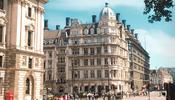
London: An overview of Lambeth’s School Streets
In the London Borough of Lambeth, 40 school streets were implemented, as of mid-2025. Of these measures, 24 are permanent interventions covering 25 schools, with plans to add up to 17 more by November 2025. JUST STREETS funded a pilot enhanced school street at one of the primary schools. The enhanced school streets include elements like play spaces, increased greening, cycling parking and improved community areas. Co-design has been central to this expansion — students, parents and teachers contribute through surveys, workshops, and on-site feedback, ensuring interventions are locally relevant.
The community has responded positively to the changes, with some even requesting that more school streets be implemented. Building on the success of the pilots, the borough plans to continue involving parents and residents, recognising the key role they have played. The borough has also organised additional co-design sessions with school students to shape future improvements.
City of Trikala: Safe and Inclusive Streets in Trikala – ELABORATOR’s Smart Solutions
Trikala has around 85,000 residents in its core and over 50,000 registered cars, leading to congestion and environmental strain in the city centre, safety risks for cyclists and pedestrians and social exclusion for those without access to a private vehicle. Under the ELABORATOR project, the city is piloting 60 sensors to record the use of bike lanes and record illegal parking on bike lanes in a bid to redesign safer and better bike lanes, implement smart crossings outside a school for traffic control, as well as three park and ride stations. Co-creation has also allowed the city to identify the gaps before implementing, where locals vote on priorities and prototype solutions — the underlying data and public engagement are now guiding future mobility investments.
City of Reykjavík: Making construction sites safe, one red handlebar at a time
Reykjavík’s work through AMIGOS centres on creating safer construction zones in residential areas. Through a series of co-creation workshops with residents, school representatives, and engineers, the city identified challenges and brainstormed solutions. Following this, the city developed a prototype barrier and signage system designed to enhance both real and perceived safety near building sites. This prototype is planned to be piloted in August, with evaluation planned via cameras and surveys to assess its impact, guide refinement and potential replication further down the line.
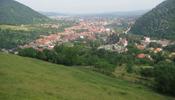
City of Cugir: Just Streets Cugir - Reclaiming Streets for People
The case of Cugir highlighted the interconnection among accessibility, behavior change, and safety. In the context of the JUST STRETS project, a mobility facilitator was appointment to meet with various stakeholders to better understand and address their mobility needs. Included among the actions carried out by Cugir were infrastructure interventions that helped to enhance physical and perceived safety, collaborating with high school students to develop instructional videos on how to use the bike-sharing system and promote active mobility on social media, working with police to organize workshops to teach young school children how to safely behave in traffic and pedestrian areas, and involving the elderly in tailor mobility activities to promote social inclusion and safer movement. Once a month, Cugir also implements the Green Friday concept, during which the street is taken away from cars and instead opened for pedestrians. Cugir demonstrates that integrating infrastrucutre improvement with soft behavioural measures yields safety benefits.
To learn more about the mentioned safety solutions, please check out the complete presentation slides here.