CIVINETs Delivering Impact in 2025: Local action, Shared Learning and European values
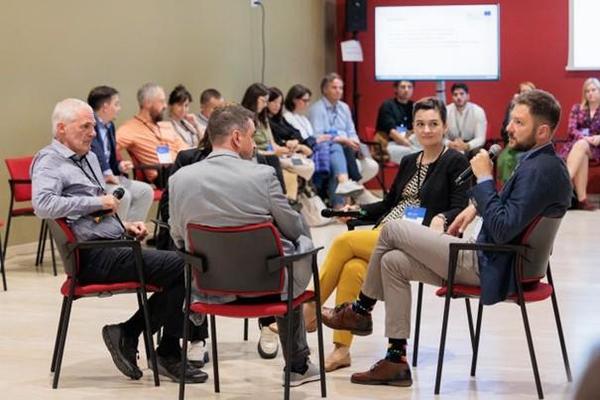
Image from Mobile21 by Fred Dotter
In 2025, the CIVITAS National Networks (CIVINETs) once again demonstrated how strong national and regional cooperation can translate European sustainable mobility ambitions into practical, locally relevant action. Supported by the CIVINET Annual Plan 2025 and embedded in the wider CIVITAS community, CIVINETs played a vital role in strengthening capacities, fostering peer learning, and encouraging cooperation across borders.
Turning Shared challenges into collective progress
Across Europe, CIVINETs created valuable opportunities for cities and practitioners to exchange experiences, test ideas, and jointly reflect on implementation challenges. Through workshops, peer-learning sessions, webinars, and study visits, networks addressed real-life questions such as promoting active mobility, encouraging behavioural change, and embedding sustainable mobility within local policy frameworks.
“What makes CIVINET particularly valuable is the trust within the network. Cities feel comfortable sharing not only their successes, but also the challenges they face when implementing sustainable mobility measures,”said Fred Dotter, CIVINET Helpdesk on behalf of CIVITAS MUSE.
Many CIVINETs placed a strong emphasis on hands-on capacity building, ensuring that learning could be directly applied in daily practice within cities and regions. At the same time, several networks focused on broadening outreach, engaging new members and stakeholders while consolidating existing communities of practice.
CIVINETs in Action Across Europe
Across regions, CIVINETs translated shared priorities into locally adapted and impactful activities, responding to diverse policy contexts while contributing to common European objectives.
- In Central Europe, CIVINET Czech and Slovak Republics and Magyar CIVINET facilitated peer-learning formats that enabled cities to exchange concrete tools for planning and implementation, reinforcing cross-border cooperation within a shared policy environment.
- In Southern Europe, CIVINET Italia, CIVINET Iberia, and CIVINET Greece–Cyprus combined in-person events with online exchanges, reaching a wide range of stakeholders and strengthening the connection between national discussions and European sustainable mobility priorities.
- In Eastern Europe, CIVINET Polska and CIVINET Romania focused on capacity building and stakeholder engagement, strengthening local expertise while increasing awareness of CIVITAS knowledge, resources, and opportunities.
- In South-East Europe, CIVINET Slovenia–Croatia SEE fostered regional dialogue and mutual learning, supporting cities in aligning local action with broader European mobility frameworks.
- In Ukraine, CIVINET Ukraine delivered an ambitious programme under particularly challenging circumstances, maintaining strong international cooperation and ensuring continued access to EU-aligned knowledge and peer support.
Beyond the CIVINETs funded under the Annual Plan,CIVINET. BE continued to contribute actively to the wider CIVINET ecosystem. Through its long-standing experience, strong national positioning, and engagement in European debates, CIVINET .BE provided valuable reference points and inspiration for other networks. This broader sense of belonging to a shared CIVINET community has helped keep knowledge, experience, and innovation flowing across borders, even where funding frameworks differ.
Across these exchanges, city representatives consistently highlighted the value of learning from peers facing similar challenges and of returning home with practical, adaptable ideas that could be transferred to their own local contexts.
Building Momentum for the Years Ahead
Taken together, the 2025 activities highlight the unique added value of CIVINETs: locally rooted networks connected through a shared European framework. By combining trust-based cooperation with practical exchange, CIVINETs help cities move from strategy to implementation—while ensuring that lessons learned travel across borders.
As the CIVINET community looks ahead to 2026, these experiences provide a solid foundation for deeper collaboration, wider outreach, and continued innovation in support of resilient, inclusive, and sustainable urban mobility across Europe and beyond.
For more information about the CIVINETs, visitcivitas.eu/civinets.
Author: Fred DOTTER